
Advanced Restaurant Social Media Strategies to Drive Actual Foot Traffic
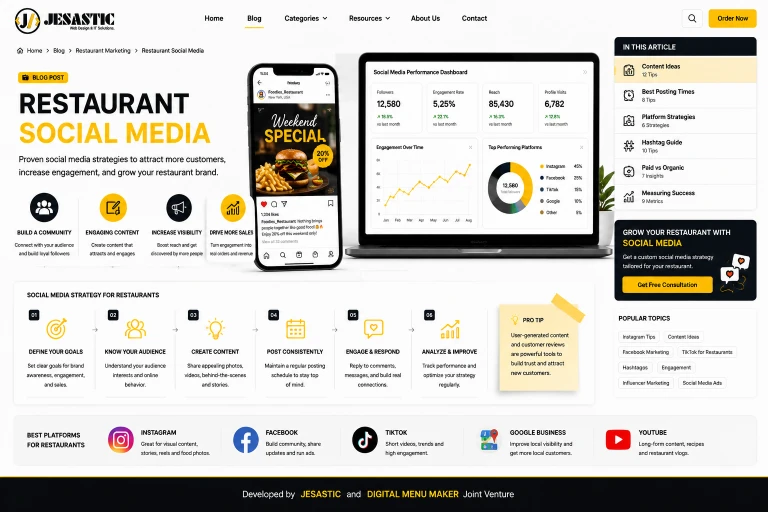
A fatal flaw in the modern hospitality sector is confusing social media visibility with operational profitability. Generating ten thousand views on a trendy TikTok audio track feels rewarding to a social media manager, but if those views originate from users three states away, the resulting ROI on that content is absolute zero. In the restaurant business, you do not bank "likes"—you bank cleared checks.
To successfully leverage platforms like Instagram, Facebook, and TikTok, operators must fundamentally shift their perspective. Social media is not a digital art gallery for your food; it is a high-velocity sales funnel. Every piece of content published must be explicitly designed to capture local attention, provoke immediate hunger, and seamlessly transition the user from their social feed into your digital ordering ecosystem.
1. The Pivot from Vanity Metrics to Transactional Engagement
The standard restaurant social media playbook consists of posting a highly edited, static photo of a burger with a caption like "Come and get it!" This strategy no longer works. The algorithms powering modern social networks prioritize watch time, saves, and shares. Static images lacking human context are actively suppressed by these platforms.
Transactional engagement requires engineering content that forces the user to take a physical action. Instead of a static photo, publish a tight, 7-second vertical video (Reel/TikTok) demonstrating the cheese pull of that burger, the sound of the grill, and a human reaction to taking the first bite. The caption must contain a direct CTA (Call to Action): "Tag who owes you lunch this week. Tap the link in our bio to order ahead for pickup."
When you transition from trying to look "aesthetic" to intentionally triggering cravings and providing a direct path to purchase, your conversion rates will align directly with your profit margin goals.
2. Executing the 3-1-1 Content Framework
Consistency is paramount, but content fatigue will destroy your organic reach. If you only post promotional flyers, your local audience will eventually mute your account. To maintain aggressive organic reach while continuously selling, implement the 3-1-1 framework weekly:
- 3 Value/Entertainment Posts: Behind-the-scenes kitchen prep, chef interviews, highlighting local farmers, or showcasing staff personalities. This builds brand equity and algorithmic trust.
- 1 Social Proof Post: Reposting user-generated content (UGC). When a customer tags your restaurant in a high-quality story, share it. It serves as digital word-of-mouth validation.
- 1 Hard Sell Post: A highly produced video explicitly promoting a high-margin item, a limited-time offer (LTO), or pushing users to your digital menu displays to drive immediate weekend traffic.
3. Dominating Hyper-Local Paid Amplification
Organic reach is unpredictable. To secure consistent weekend revenue, you must support your organic efforts with hyper-local paid advertising via the Meta Ads platform. "Boosting" a post directly from the Instagram app is a waste of marketing capital. You must use the backend Meta Ads Manager to deploy geo-fenced campaigns.
The 3-Mile Retargeting Loop
Set your ad targeting to an exact 3-mile to 5-mile radius around your physical address. Create a "Custom Audience" consisting only of users who have engaged with your Instagram or Facebook page in the last 30 days. Serve this warm audience a video ad on Thursday afternoons featuring a high-ticket weekend special. Because these users already know your brand, the Cost Per Acquisition (CPA) plummets, and weekend reservations surge.
4. Owning Your Digital Real Estate
Never forget that you are renting space on Mark Zuckerberg's platforms. If an algorithm update suppresses your reach tomorrow, your foot traffic cannot be allowed to suffer. The ultimate goal of your restaurant's social media strategy is to move users off the platform and onto digital real estate that you own.
Your Instagram bio link should never point to a generic homepage. It should route users directly into a frictionless, mobile-optimized ordering flow. By capturing their data (email/phone number) during the checkout process via your proprietary system, you can bypass social media algorithms entirely. You can now market directly to your best customers via SMS or email campaigns, ensuring long-term retention and eliminating your reliance on external tech conglomerates.
Combine this direct marketing approach with strong Google Business Profile optimization, and you create an inescapable digital net that captures both high-intent search traffic and passive social scrollers.