
The Cost of Maintaining Culinary Perfection
In the world of fine dining, the menu is not just a list of items—it is an extension of the Executive Chef's vision. Traditionally, upscale restaurants have relied on heavy, leather-bound portfolios and expensive textured cardstock to convey luxury. But there is a massive operational flaw hidden behind this tradition: inflexibility.
When you operate at the highest level of hospitality, your ingredients change based on daily market availability. If your supplier cannot deliver the diver scallops and you need to pivot to halibut, you are faced with a difficult choice: verbally explain the change to every disappointed table, cross it out with a pen (which ruins the aesthetic), or rush-print a completely new set of menus.
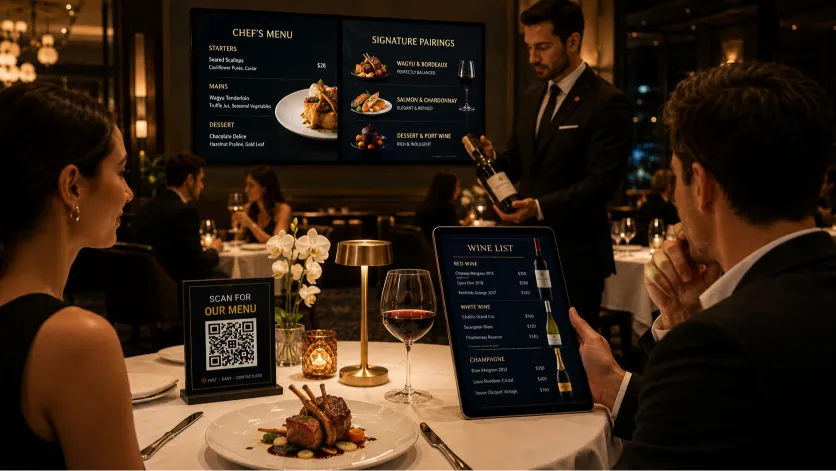
The Operational Reality: I've seen high-end restaurants spend thousands of dollars a month just reprinting their menus and wine lists because a specific vintage ran out or a seasonal garnish changed. A fine dining digital menu eliminates this overhead entirely while providing a highly curated, premium guest experience.
Moreover, upscale restaurants in major metropolitan areas frequently host international tourists. Explaining a complex, seven-course tasting menu across a language barrier is frustrating for both the guest and the server. Digital menus solve this by allowing guests to read elegant, accurate descriptions in their native language directly on their own devices.