
Elevate Your Brand with Visual Food Storytelling
People eat with their eyes first. Discover how expert visual food storytelling transforms your digital presence, turning passive website visitors into paying, seated guests through high-converting culinary aesthetics.
Why Text-Only Menus Kill Conversion Rates
In a hyper-competitive digital landscape, relying solely on text descriptions is a massive liability. Diners require visual confirmation of quality, portion size, and culinary style before they commit to a booking or an online order.
Trigger Impulse Buys
A beautifully lit photo of a dessert or signature cocktail triggers an immediate biological response, directly leading to higher average ticket sizes and automated upselling.
Build Brand Trust
Authentic, high-definition imagery of your actual dishes establishes immediate credibility, assuring first-time website visitors that your kitchen maintains pristine quality standards.
Dominate Social Proof
Highly visual, aesthetically pleasing food presentations encourage customers to share your website links, effectively turning your menu into a viral marketing asset.
The Impact of Professional Food Photography
The core engine of your visual strategy must be professional food photography. Far too many restaurant owners undermine their own digital platforms by uploading grainy, unlit smartphone photos or, even worse, generic stock imagery. When a user detects stock photos, brand trust evaporates instantly. Investing in professional food photography ensures that the true texture, temperature, and vibrancy of your dishes are captured. Proper lighting can make a perfectly seared steak look irresistible or highlight the crisp condensation on a craft cocktail. These high-definition, authentic images serve as the foundation of your website's aesthetic, providing the visual proof necessary to convert a hesitant online browser into a confident buyer.
Forging Your Culinary Brand Identity
Your visuals do more than just show the food; they communicate your culinary brand identity. A user should understand your restaurant's atmosphere within three seconds of landing on your homepage. If your concept is a high-end steakhouse, your imagery should leverage moody, low-key lighting, rich shadows, and elegant plating to convey luxury. Conversely, if you operate a fast-casual taco truck, your culinary brand identity should explode with high-saturation colors, bright daylight settings, and energetic, messy action shots. By rigorously aligning your visual assets with your operational concept, you set accurate dining expectations, attracting the exact demographic you are targeting and filtering out those who are looking for a different experience.
Mastering Menu Visual Hierarchy
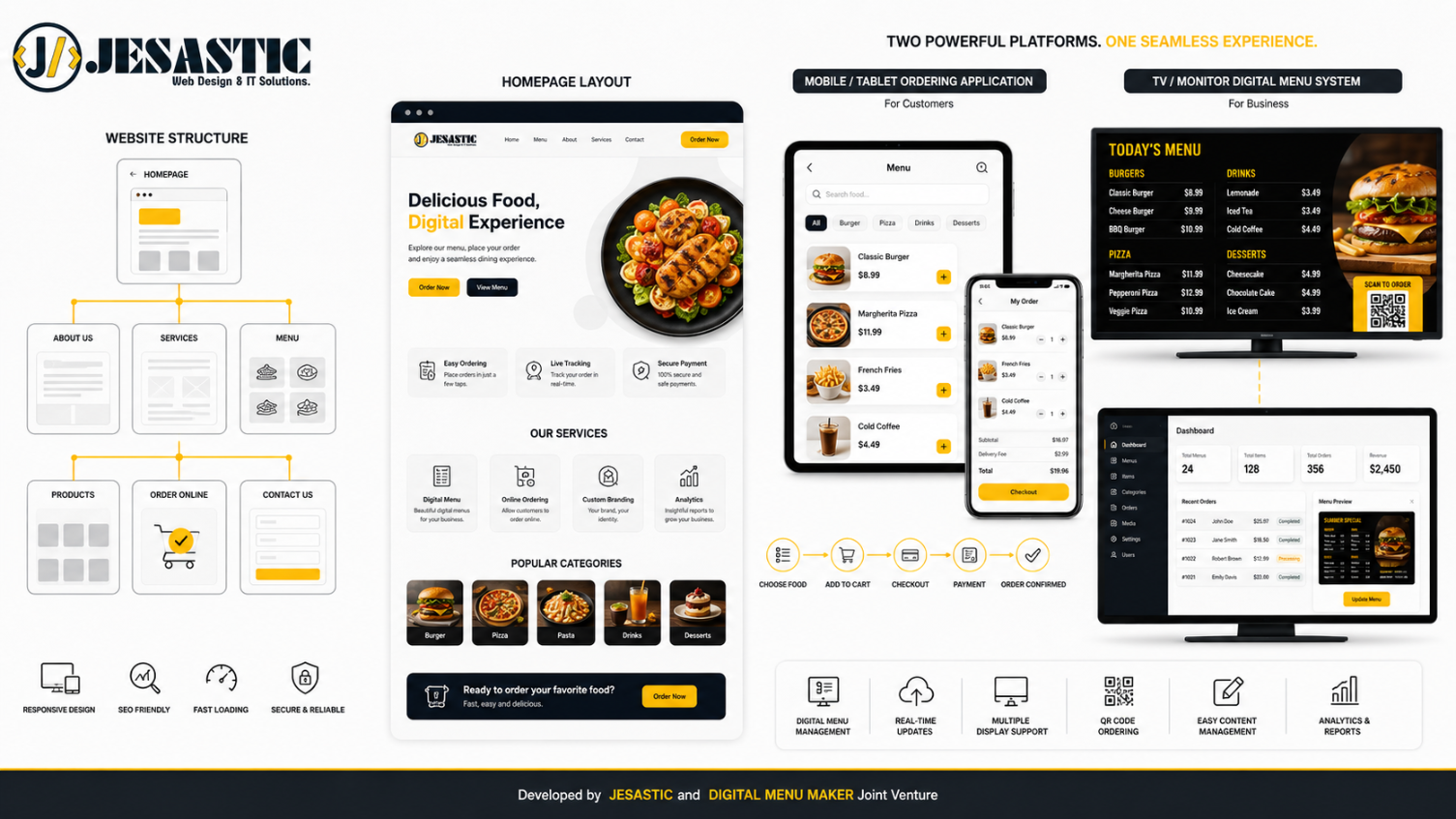
A collection of beautiful images is useless if they are arranged chaotically. To drive actual revenue, your website must employ strict menu visual hierarchy. This is the structural science of guiding the user's eye exactly where you want it to go. Effective menu visual hierarchy dictates that you do not need a photo for every single item on your menu—doing so creates visual fatigue. Instead, you strategically deploy large, high-definition hero images exclusively for your highest-margin items, signature dishes, and visually spectacular add-ons. By surrounding these key visual anchors with ample negative space and clean typography for the supporting, lower-margin items, you manipulate the browsing experience. The customer's attention is naturally drawn to the most profitable items on the page, significantly increasing the likelihood that they will bypass the basic entries and order your premium offerings.
Optimizing Digital Food Presentation
The final step in this process is ensuring your digital food presentation performs flawlessly on a technical level. High-resolution photos are incredibly heavy data files. If not handled correctly, they will throttle your website's load speeds, devastating your local SEO rankings and causing high mobile abandonment rates. Superior digital food presentation requires aggressive backend optimization. This means converting raw image files into next-generation formats like WebP, utilizing intelligent lazy-loading scripts so images only render as the user scrolls, and deploying a robust Content Delivery Network (CDN) to serve assets locally. By merging stunning culinary visuals with elite web performance, you guarantee that your visual narrative is delivered to the customer instantly, creating a frictionless, highly persuasive digital dining experience.
Explore More Web Design Features
Visual storytelling is just one pillar of your digital success. Discover the technical integrations required to build a highly profitable restaurant website.
Frequently Asked Questions
Expert insights on leveraging culinary aesthetics and layout science to drive more restaurant sales.
What exactly is visual food storytelling?
Visual food storytelling is the strategic use of photography, layout, and digital design to communicate the quality, origin, and experience of your menu items. It moves beyond simple text lists to evoke an emotional and biological response from the viewer.
Why is professional food photography critical for my restaurant website?
Grainy, unlit smartphone photos actively harm your brand. Professional food photography utilizes proper lighting and styling to showcase texture and freshness, which directly increases online conversion rates and average ticket sizes.
How does visual storytelling build culinary brand identity?
Your culinary brand identity is communicated through aesthetics. A moody, low-lit photo of a steak implies fine dining, while bright, highly-saturated images of tacos imply a fast-casual, energetic vibe. Consistent visuals instantly tell the customer what to expect.
Should I use stock photos on my restaurant website?
Never. Customers are highly attuned to stock imagery and it immediately destroys trust. Using authentic digital food presentation of your actual dishes sets realistic expectations and protects your reputation from disappointed diners.
What is menu visual hierarchy?
Menu visual hierarchy is the design practice of using scale, color, and placement to guide the user's eye to your most profitable or signature items first. It ensures high-margin dishes stand out against lower-margin filler items.
Does adding large photos slow down my restaurant website?
It can, if not handled correctly. However, our platform utilizes advanced image compression (converting images to modern WebP formats) and lazy loading to ensure your visual food storytelling remains stunning without sacrificing page load speeds.
How many photos should I include in my online menu?
You do not need a photo for every single item. Best practices suggest visually highlighting 20-30% of your menu—specifically your signature dishes, highest-margin items, and visually striking desserts or cocktails to maximize visual impact.
How does digital food presentation affect upselling?
Text alone rarely triggers an impulse buy. When a customer is prompted with a high-definition, visually appealing photo of a dessert or a premium side dish right before checkout, the likelihood of an upsell increases dramatically.
What role does color play in visual food storytelling?
Color psychology is powerful in the hospitality sector. Warm colors like reds and oranges can stimulate appetite, while greens emphasize freshness and health. Your digital food presentation should leverage these colors to reinforce your brand's messaging.
How often should I update the visual content on my website?
You should update your visual content whenever your menu undergoes seasonal changes or when launching new signature items. Stale visual content can make a restaurant appear inactive, while fresh imagery signals a thriving, innovative kitchen.
Ready to Transform Your Digital Menu?
Upgrade to a beautifully designed, visually compelling restaurant website that turns casual browsers into high-spending customers.
Explore more industry-specific tools and solutions: