
High-Visibility Food Truck Digital Menu Board Systems
Stop rewriting chalkboards in the wind and rain. Upgrade to a dynamic, portable menu board that stands out under bright sunlight, increases average transaction size, and handles fast-paced mobile service with absolute ease.
The Extreme Reality of Running a Mobile Food Kitchen
On a hot Friday night or during a 45-minute lunchtime business park rush, food truck operations are intense. Traditional printed signage, plastic clip-ons, and chalkboards simply cannot keep pace with dynamic street-food environments.
86'ing Items Instantly
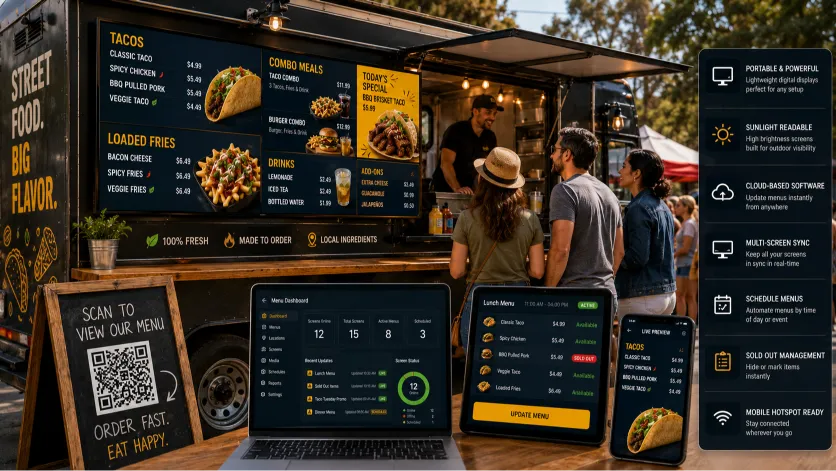
When you run out of your signature brisket burger mid-rush, crossing it out with dry-erase marker looks unappealing. With our mobile system, tap your phone screen and hide or swap the item instantly without slowing down service.
High Outdoor Sunlight
Most consumer TVs turn into highly reflective mirrors when put outdoors. Our system pairs with high-nit digital displays to cut through daylight glare, keeping prices legible even in direct noon sunlight.
Converting Walk-By Traffic
Your competition is often parked right next to you. High-contrast imagery of sizzling street food displayed on vibrant outdoor TV panels attracts passersby far more effectively than static text panels.
Engineered for Constant Mobility and Quick Swaps
Our portable menu board software is built with the physical limits of trucks in mind. We operate with minimal data footprint, allowing you to update layouts over standard mobile hotspots without lagging.
Do you change your menu based on where you park? Set up location-specific layouts ahead of time. Charge premium rates for weekend downtown festivals, and easily switch to your standard value pricing for weekday industrial parks—all with one tap on your mobile device.
Because visual menu designs drastically alter buying psychology, you can configure your screens to display mouthwatering video loops of specialized menu items during long queues, actively keeping waiting customers engaged and hungry.
Understanding Outdoor TV Menu Systems & Hardware Requirements
Mounting displays to a mobile trailer or step van requires careful planning around physical vibrations, humidity, and varying light conditions. You can't just hang a basic house TV on the side of a food truck and hope it lasts.
High-Brightness Commercial Screens (Nits)
Standard home television panels generally output around 250 to 350 "nits" of brightness. Under direct daylight, they become impossible to read. True mobile digital signage requires displays pushing at least 1,500 to 2,500 nits. High-nit screens ensure your menu remains clear, preventing customers from walking away out of frustration from squinting at your offerings.
Weatherproof Protection & Enclosures
From humid summer storms to frying grease mist drifting from your extractor fans, the environment outside your truck is harsh. Using IP65-rated weatherproof protective enclosures shields your electronics from moisture, dust, and physical impact. It also features thermostat-regulated fan systems to prevent screens from overheating during hot summer service days.
A Lightweight System that Caches Offline
When you're out in the field, reliable cellular internet can be hard to find. The last thing you need is a blank screen right as the lunchtime rush begins.
Our platform resolves network instability by using advanced offline caching. Your mobile digital signage templates download completely to your local media player device. If you lose connection entirely, your screen keeps running flawlessly without a single hitch.
When you get back online via a cellular hotspot, the player automatically connects with our cloud platform to update changes in seconds. This lightweight protocol keeps your cellular data usage extremely low.
The Stress-Free Way to Speed Up Ordering Lines
A major bottleneck for mobile catering trucks is the ordering point. When customers stand near the register trying to decipher handwritten chalkboards or faded printouts, order times slow down. We designed our system to improve this visual interaction.
- Combat Ingredient Shortages Instantly: If you run out of avocado, immediately hide the item or alter its recipe across all active displays in seconds.
- Promote High-Margin Combo Sets: Draw high-contrast borders around profitable items like drinks and loaded side dishes, turning simple single-item orders into high-ticket combos.
- Zero Printed Waste: Stop spending money on physical vinyl signs every time your meat suppliers adjust their wholesale pricing.
Related Digital Menu Board Solutions
Tailor your display configurations to match your exact setup. Explore our specific platform solutions for mobile, static, and high-brightness situations.
Frequently Asked Questions
Answers to common questions about setting up and running digital menu boards in mobile environments.
How bright should a TV screen be for an outdoor food truck menu setup?
To cut through ambient daylight, you need a high-brightness commercial screen of at least 1,500 to 2,500 nits. Standard indoor house TVs run at about 300 nits, which will wash out completely under daylight. High-nit screens keep your text legible in bright sun.
Does this software require constant internet connection to stay running?
No. Our platform uses offline caching. The media player runs the menu locally from its built-in memory. An active internet connection is only needed when you want to update prices or edit items from your dashboard.
Can I run your menu system over a mobile phone hotspot connection?
Absolutely. Our software transfers raw text and compressed layout code instead of streaming massive continuous video. This makes updates extremely fast and safe to run over cellular 4G/5G mobile hotspots without using up your data plan.
How do food truck operators protect screen hardware from rain and outdoor grease?
We recommend using IP65-rated outdoor display enclosures. These protect screens from water, dust, and grease, while using internal fan networks to keep everything running cool during hot weather.
What are the best mounting options for food trucks and mobile trailers?
Many operators mount screens inside their service hatch so they can easily lock them away at night. Others install heavy-duty swing-arm mounts on the outer panels of the truck or set up portable display stands near the ordering line.
How much power do digital menu board systems consume on generator setups?
Standard LED media players and small smart displays require very little power (typically 80-150 watts for a standard display, slightly more for ultra-bright commercial screens). This makes them easy to run alongside your refrigeration and cooking equipment on standard generators or invertor batteries.
Modernize Your Food Truck Service Line Today
Cut down order line confusion, instantly update sold-out specials, and attract more foot traffic with a bright, dynamic menu system designed for the streets.
Explore more industry-specific tools and solutions: