
Menu QR Code & Barcode Tools
Modernize your guest experience and reduce printing costs. Use our free generator tools to create high-resolution dynamic QR codes, format digital layouts, and transition away from expensive paper menus.
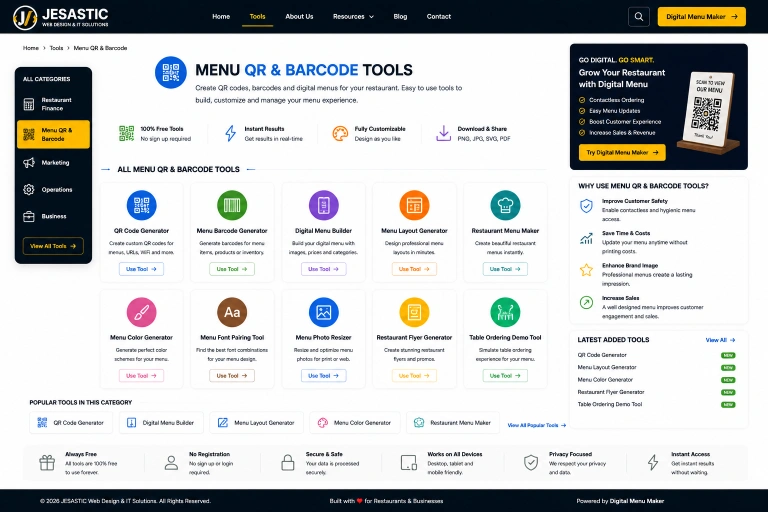
QR & Design Generators
Generators Sychronizing...
Our engineering team is actively deploying the QR and barcode tools to this directory.
The Operational Advantages of QR Code Menus
The transition from physical, printed menus to digital QR code ecosystems is no longer a temporary health measure; it is a permanent, structural shift in hospitality economics. Operating a restaurant with traditional paper menus introduces continuous friction, high overhead costs, and drastically limits your ability to adapt to market changes.
Our suite of free QR code generators and digital menu utilities is designed to help operators digitize their front-of-house experience. By migrating your offerings to a mobile platform, you unlock a level of agility and data capture that physical paper can never provide.
Eliminating Print Costs and Menu Rigidity
In a volatile supply chain environment, food costs fluctuate daily. If the wholesale price of beef spikes by 15%, an operator relying on physical menus has two choices: absorb the loss and destroy their profit margin, or spend hundreds of dollars to reprint their entire menu suite. This creates "Menu Rigidity."
A dynamic QR code completely solves this problem. Because a dynamic QR code points to a digital webpage (rather than a static PDF file), you can update your pricing, instantly 86 (remove) sold-out items, or launch a new seasonal special in seconds. Your profit margins are protected in real-time, and you completely eliminate your recurring commercial printing budget.
The Death of the PDF Menu
A critical mistake many operators make when adopting QR technology is linking their code to a static PDF of their old physical menu. This creates a terrible user experience, forcing the customer to pinch, zoom, and scroll aggressively on their smartphone screen.
To maximize table turnover and increase your Average Order Value (AOV), your QR code must link to a mobile-optimized, native HTML interface. A proper digital menu operates like an e-commerce store, featuring high-resolution images, clear categorization, and the ability to process transactions. When customers can visually browse high-quality food photography and order at their own pace without waiting for a server, check sizes organically increase.
Strategic Placement of QR Codes
The success of a digital menu relies heavily on accessibility. Do not simply tape a printed code to the center of a table. Deploy your QR codes strategically across multiple touchpoints:
- Table Tents & Acrylic Stands: Place durable, high-contrast QR codes directly in the center of the dining table for seated ordering.
- Host Stands & Waiting Areas: Allow guests to scan the menu and decide on their order before they are even seated, dramatically speeding up the table turnover cycle.
- Takeout Packaging: Include a specialized QR code on your delivery bags that links directly to your first-party ordering platform, incentivizing customers to bypass third-party delivery apps (and their heavy commission fees) on their next order.