
Flawless Mobile Responsive Menus for Restaurants
Over 80% of your diners are browsing your website on their smartphones. If they have to pinch and zoom to read a PDF, they will leave. Upgrade to fluid, mobile responsive menus that drive higher engagement and increase online sales.
The Consequences of Ignoring Mobile Users
Relying on outdated digital formats like PDFs or non-responsive tables actively destroys your conversion rates. Diners expect the same frictionless experience from your restaurant as they get from major e-commerce apps.
Eradicate the Pinch & Zoom
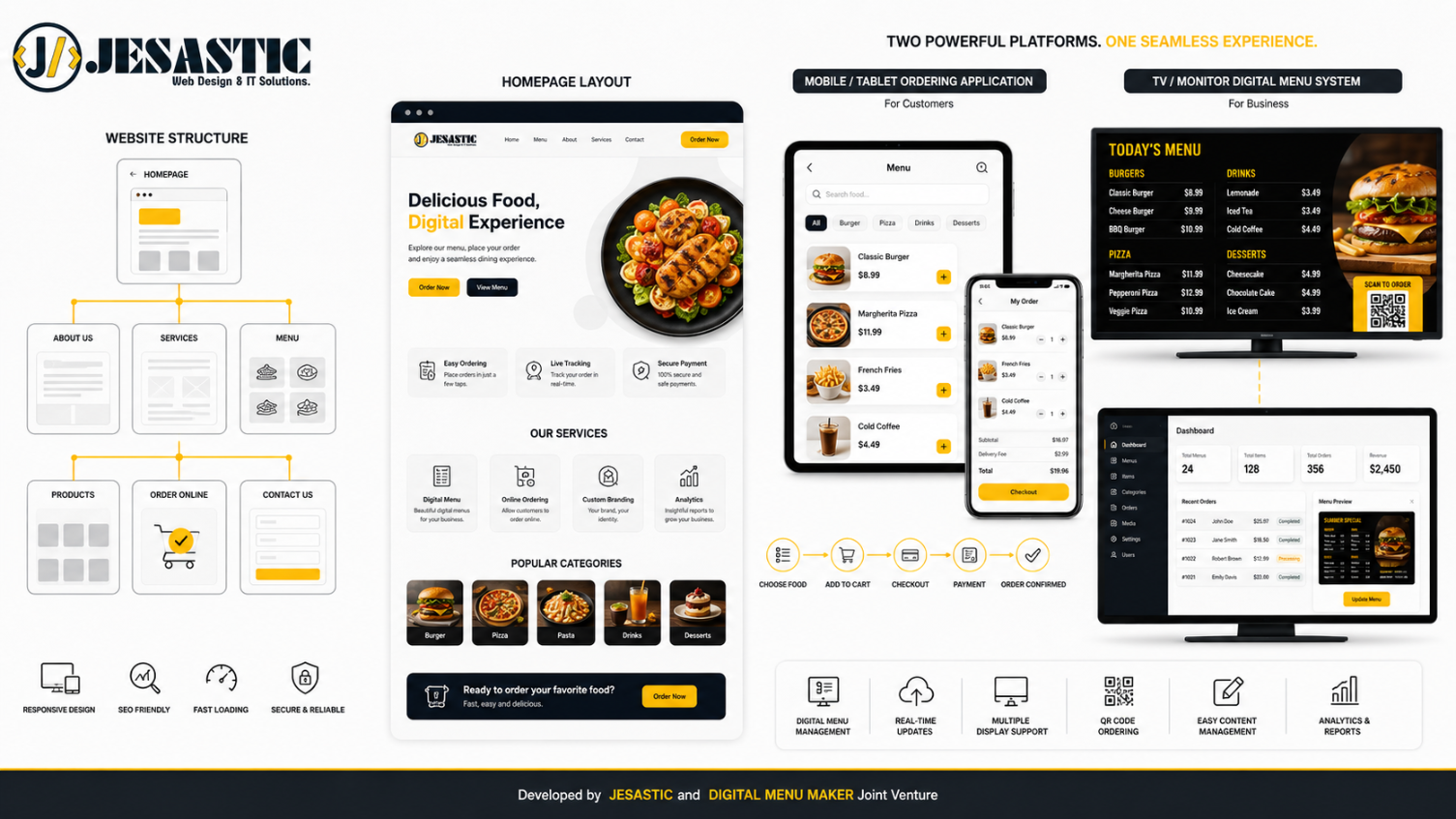
Responsive architecture ensures that fonts, columns, and images automatically stack and scale to perfectly fit any iPhone or Android screen, completely removing visual frustration.
Accelerate Checkout Flow
When interactive buttons are sized appropriately for thumbs and layouts are clean, users add items to their carts with confidence, drastically accelerating your digital sales volume.
Boost Local SEO Rankings
Google utilizes 'mobile-first indexing'. If your digital menu is responsive and fast on mobile, search algorithms will reward you with higher placement in local restaurant search results.
Mastering Restaurant Mobile UX
The foundation of any successful digital ordering system is a superior restaurant mobile UX (User Experience). When a hungry diner lands on your website via their phone, their patience is incredibly short. They do not want to hunt for hidden links or wait for heavy files to render. A premium restaurant mobile UX ensures that the transition from viewing an ad or a Google listing directly into your digital menu is completely frictionless. This means utilizing high-contrast typography, large, tap-friendly buttons, and logical categorization. By removing visual clutter and guiding the user intuitively through your culinary offerings, you drastically lower your bounce rates and create an environment where customers feel comfortable spending more time—and consequently, more money—on your site.
Optimizing Smartphone Menu Navigation
A beautiful interface is entirely useless if the customer cannot find what they want to eat. This is why intelligent smartphone menu navigation is absolutely paramount. Unlike a physical menu where a diner can scan all pages at once, a mobile screen is highly restrictive. To counteract this, modern frameworks employ sticky category headers that remain at the top of the screen as the user scrolls, allowing them to jump from 'Appetizers' directly to 'Desserts' with a single tap. Furthermore, excellent smartphone menu navigation incorporates collapsible accordion menus and accessible 'Back to Top' floating action buttons. By eliminating the need for endless, frustrating scrolling, you streamline the decision-making process, ensuring the path from browsing to purchasing is completely unobstructed.
Ensuring Strict Digital Menu Accessibility
In today's digital landscape, ignoring digital menu accessibility is not just bad for business—it can expose your restaurant to severe legal liabilities under ADA compliance laws. Unlike static PDF menus or flat JPEG images, a responsive HTML-based menu is fundamentally designed to be accessible to everyone. True digital menu accessibility means that visually impaired guests can easily interact with your site using standard screen reader software, which smoothly converts the HTML text descriptions and prices into spoken audio. Furthermore, a responsive framework ensures that when a user increases the default font size in their smartphone's accessibility settings, the menu layout adapts fluidly without breaking or cutting off text. By actively accommodating all potential diners through clean code, sufficient color contrast ratios, and clear structural tags, you broaden your customer base while protecting your brand's legal standing.
Adopting Mobile First Restaurant Design
The days of building a beautiful desktop website and treating the mobile version as an afterthought are completely over. To dominate your local market, you must fully embrace a mobile first restaurant design philosophy. Because the vast majority of local 'near me' dining searches happen on the go, your digital presence must prioritize the smartphone experience above all else. A mobile first restaurant design starts by conceptualizing the UI for the smallest screen possible. It ensures that load times are blazing fast over 4G cellular networks, that thumb-reach zones are optimized for one-handed operation, and that critical actions—like making a direct booking or launching Google Maps for directions—are prominently featured without any zooming required. Once the mobile experience is perfected, the layout gracefully expands for tablet and desktop users, guaranteeing a world-class presentation across every single device format.
Explore More Web Design Features
A flawless responsive menu is just one part of the equation. Discover the other critical integrations required to build a highly profitable digital storefront.
Frequently Asked Questions
Clear up the confusion around mobile responsiveness and understand why it is a mandatory investment for your restaurant.
What exactly are mobile responsive menus?
Mobile responsive menus are web-based digital catalogs that automatically adjust their layout, font size, and image scaling to perfectly fit the screen of any device—whether it is a small smartphone, a tablet, or a desktop computer.
Why is a PDF menu not considered mobile-responsive?
A PDF is a static document formatted for standard printing paper. It does not adapt to screen sizes, forcing mobile users to constantly pinch, zoom, and pan around the file just to read the items, which ruins the restaurant mobile UX.
How does smartphone menu navigation affect my sales?
Frictionless smartphone menu navigation allows users to quickly find what they want. By implementing sticky category headers and easy scrolling, customers don't get frustrated, significantly reducing order abandonment and increasing the likelihood of adding extra drinks or desserts.
What does mobile first restaurant design mean?
Mobile first restaurant design is a web development approach where the website and digital menus are designed primarily for smartphone users before adapting them for desktop screens. This is crucial because over 80% of restaurant searches occur on mobile devices.
Do responsive menus improve my local SEO rankings?
Yes. Google uses mobile-first indexing to rank websites. If your menu is built using responsive HTML rather than a static PDF, Google rewards your site with higher rankings in local search results, driving more foot traffic to your door.
How do responsive menus improve digital menu accessibility?
Unlike flat images or PDFs, responsive HTML menus can be seamlessly interpreted by screen readers used by visually impaired guests. Furthermore, responsive text can be enlarged natively within the device's settings without breaking the page layout, ensuring strict ADA compliance.
Can I feature food photos on a responsive mobile menu without slowing it down?
Absolutely. Responsive design frameworks automatically serve properly compressed, appropriately sized images based on the user's specific device, ensuring your visual food photography looks stunning without causing slow page loads.
Do I need a separate app for a responsive menu?
No. A truly responsive digital menu operates directly inside the native web browser (Safari or Chrome) of the user's smartphone. This entirely eliminates the friction of forcing your customers to download a third-party application to order food.
Can a responsive menu handle online ordering and payments?
Yes. Because responsive menus are built on interactive web frameworks, they can seamlessly integrate shopping carts, modifier pop-ups, and secure checkout gateways like Apple Pay and Google Pay directly into the mobile flow.
How quickly can I update items on a responsive web menu?
Changes are instantaneous. When you log into your cloud dashboard and alter a price or mark an item as sold out, the HTML automatically updates across all platforms and devices immediately, requiring zero re-uploading.
Ready to Eliminate the Pinch and Zoom?
Upgrade to a beautifully designed, mobile-first responsive architecture. Give your diners the frictionless, app-like ordering experience they expect without the heavy downloads.
Explore more industry-specific tools and solutions: