
Restaurant Operations Tools
Transform your chaotic dining room into a high-performance engine. Use our operational calculators to predict labor needs, eliminate kitchen bottlenecks, and maximize your daily table turnover rate.
Workflow & Efficiency Calculators
Operations Tools Synchronizing...
Our engineering team is actively deploying the operational calculators to this directory.
Engineering Restaurant Efficiency
In the hospitality industry, a great menu brings customers in, but flawless operations dictate whether those customers return. Operational efficiency is not about rushing your guests or cutting corners on food quality; it is about mathematically eliminating bottlenecks. Every minute a table sits empty, every extra step a server takes, and every ingredient that expires in the walk-in cooler bleeds your bottom line.
Our suite of free operational calculators and tools is designed to help restaurateurs transition from reactive management to data-driven operational control. By applying hard mathematics to your staffing, inventory, and table management, you can dramatically scale your capacity and your revenue.
The Mathematics of Table Turnover
For dine-in concepts, your physical seating capacity is the ultimate ceiling on your revenue. If you have a line out the door on a Friday night, you cannot magically create more seats. The only way to increase your gross sales is to compress the dining cycle—increasing your Table Turnover Rate.
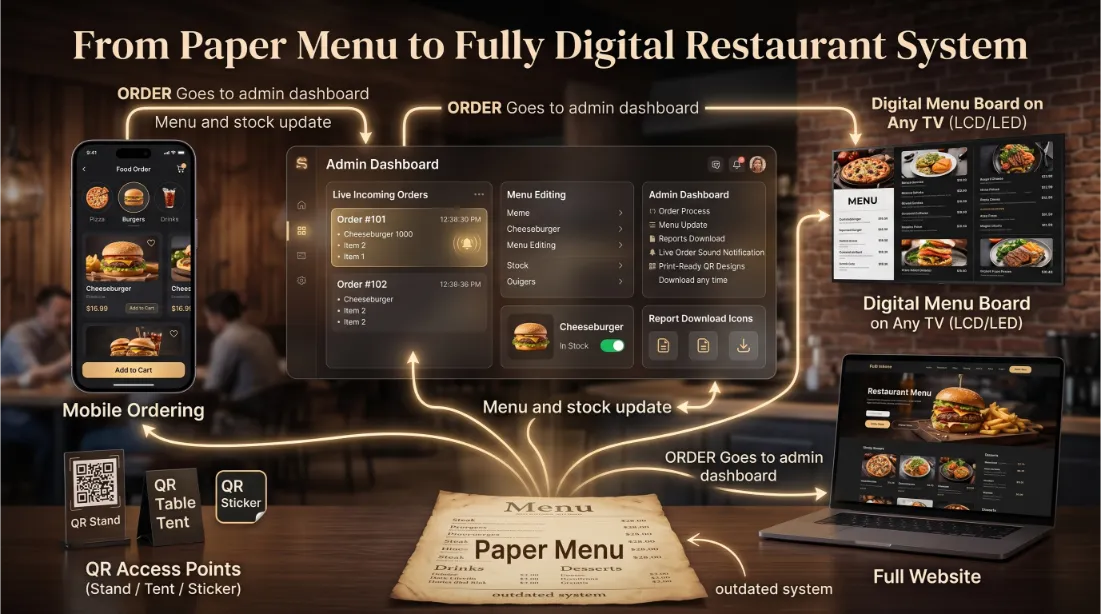
Our Table Turnover Calculators help you track your RevPASH (Revenue Per Available Seat Hour). The key to maximizing this metric is not rushing the guest's meal, but eliminating operational dead time. By utilizing digital mobile ordering, you can eliminate the "Ghost Phase"—the 10 to 15 minutes a guest spends waiting for a server to process a physical credit card. Shaving just 12 minutes off an average dining cycle allows an operator to seat an entire extra wave of diners during peak hours.
Optimizing Labor Costs and Scheduling
Labor is the most volatile and expensive variable cost in a restaurant. Overstaffing destroys your profit margin, while understaffing destroys your customer experience and future revenue. The goal is pinpoint accuracy.
Operational excellence requires you to schedule staff based on historical data and predictive analytics, not gut feeling. Using our Staff Scheduling Estimator, you can cross-reference your historical POS data against forecasted sales volume to build highly efficient schedules. Furthermore, by integrating automation (such as QR menus or Kitchen Display Systems), you can fundamentally change the ratio of staff to tables. A floor that once required six servers can now operate flawlessly with three food runners, insulating your business from rising minimum wage costs.
Inventory Workflows and Food Waste Management
Food waste is the silent killer of restaurant margins. If your kitchen prep is not strictly aligned with your actual sales volume, you are essentially throwing cash into the dumpster at the end of every shift. Proper operations require strict pars and yield management.
Our Food Waste and Inventory Calculators allow you to input your daily sales velocity and calculate exactly how much product needs to be prepped for the upcoming shift. This prevents over-prepping highly perishable items and ensures your kitchen line remains fully stocked during a rush without holding unnecessary inventory capital in the walk-in.